A blog for thoughts on entertainment, reviews on movies, video games, soundtracks, comics, graphic novels, and books, and maybe an occasional 'other' (original story, art, interview, news, bargain hunting deals/sales) post thrown in for good measure.
Saturday, June 25, 2016
Naked Lunch review - beware of food poisoning
Oof, Naked Lunch is not a good movie. I was looking forward to it, as it stars Peter Weller and is written/directed by David Cronenberg, but it's a poor hodgepodge of "Fear and Loathing in Las Vegas" (either the book or the movie), Clive Barker (Hellraiser), John Carpenter's "In the Mouth of Madness" (credit to H.P. Lovecraft) and David Lynch (in general) that doesn't amount to anything. It has some decent ideas, but the narrative is incoherent, the characters are unrelatable and worst of all - the movie is boring.
I had a feeling the movie would be an early 90s clunker when Howard Shore's crazy jazz soundtrack kicked in... at least the puppetry is decent?
Not sure there's anything worth recommending in this one, much to my disappointment. Actually, Roy Scheider is pretty awesome, but almost criminally underutilized.
Tuesday, May 24, 2016
Captain America: Civil War review, AKA Marvel’s most masturbatory movie yet
(And while jacking off may feel good in the moment, it can have messy consequences.)
Going into Civil War, I had reasonable expectations and a decent amount of excitement.
Captain American: Civil War is a two-fold experience for me. If I approach it with my brain completely turned off, then it’s a surprisingly fun action movie with lots of great character moments, a solid bad guy and is a worthwhile entry as one of the better “episodes” of the Marvel Cinematic Universe.
Then again…
If I decide to turn on my brain to use even a modicum of thought, the film decreases in value, with that balance tipping the more I critically analyze the film. Even through a critical lens, here’s my general breakdown (SPOILERS):
Good
- The characters are well-established at this point; I particularly like Tony Stark’s PTSD and the budding relationship between Vision and Scarlet Witch
- Introductions: Black Panther had arguably the best introduction in the movie, as his arc worked very well. Zemo also was a great new introduction as a villain with much more personal motives than just world destruction, global domination, etc. As for the biggest new character, Spider-man is definitely a scene stealer, but more on him below
- The big action scenes: there were two great action set pieces – 1) the much hyped airport fight and 2) the ending (but what about the other action scenes? See below)
- Humor: Civil War’s humor is good, but has some flaws (again, see below)
Not so good
- Self-reflection and themes: I really enjoyed that Civil War went a bit meta to discuss the state of the MCU thus far, calling out the previous movies and their rampant destruction – it asks the characters (and the viewers) how do we deal with the consequences of our actions when our actions often have negative consequences? The film unfortunately ends up becoming more of the same, with resolutions only occurring via action. Yes, it’s an action movie, but Civil War was so close to actually having a message.
- Themes part 2 – Politics: I like that the film raises the question on regulation, but it does not answer it or come close to answering it. Perhaps it was simply to spawn debate amongst the crowd, but come on, you’re a big giant movie, say an answer, because there is one and the film wasn’t close to touching it (hint: it’s inbetween, leaning much closer to Team Cap; more on that below).
Bad
- Emotion is the driving force: There is such little actual thinking in this movie it’s mind boggling. No character at any point stops to actually think about their actions, nor do they consult anyone. Everyone has already formed their opinions, based on their emotions, then they just… go. A genius mind like Tony Stark’s can’t think to discuss the idea of registration? Nobody wants to board out the pros and cons? Nobody realizes there are other options? Civil War is maybe one of the best examples in film of either super incompetent powerful people or powerfully incompetent super people.
- The plot: Speaking of the above, while the characters are mostly OK (or at least in line with previous depictions), the characters are only behaving the way they are to service the plot and story Marvel and the Russo brothers want to tell. Tony Stark may get some leniency due to his PTSD, but that’s weakly touched upon. Black Widow could have been great, but just does what Black Widow does. Again, nobody talks things out or thinks things through. It’s all in service of the action. There is such little growth and solid character arcs (save for Black Panther).
- The tone: Is it trying to be exciting? Humorous? Mysterious? It touches on many different tones as it crosses genres (action, comedy, political thriller, satire/social commentary) and is definitely dark, but never actually commits to one and falls short of all by the end, because…
- The pacing: Let’s be honest, this is one of the key areas where the film breaks down. The first act/third is great with its idea of exploring the reality of the Marvel movies thus far, regarding the actions of the Avengers (granted, it rings hollow because it doesn’t raise accountability of any other mass militia/global organization; but that’s a different story). Then, as they’re starting to touch on some good high-level ideas, it branches off to a lengthy Spider-man introduction. Yes, the scene is incredibly fun, but it’s so randomly out of place; more on that below. Then the big airport action to round out the middle, followed by getting back to the feud between the two main characters and revelation of the villain in the final act. While the first and third acts make sense, they are so derailed by the second act that it hurts the pacing significantly. Also, who’s story are we following – Captain America’s or Iron Man’s? Because the shift in focus is so awkward, with Iron Man really stealing the story come the credits.
- Spider-man: Yes, he’s definitely a highlight and Tom Holland is now easily in the top two live-action Spider-men (Yes, I like Maguire; no, I didn’t care for Garfield), but his lengthy introduction detracts from the actual story and plot of the movie. Sure, he made the airport scene incredibly fun, but it once again raises the question of a character not stopping to think things through. Captain America pretty much calls this out and while Spider-man acknowledges it, HE DOESN’T ACTUALLY STOP TO THINK ABOUT HIS ACTIONS OR WHY HE’S FIGHTING. But he keeps fighting because fighting is both fun and funny, right? Last point, and Jesus Christ, Tony Stark brings a… 16 year old? To a fight with SUPERHEROES. People who’ve been fighting for years. The mother freaking Avengers. He brings a 6-months experienced teenager to a fight. What the actual fuck. Pure teenager fantasy malarkey which only highlights the maturity level and target audience of this movie.
- Treatment of the villains: Really Marvel? This is the time you decide to shake things up and save a villain? Granted, I like Zemo, but really? Neither Red Skull nor Roman nor anyone else? I hope you have something nice in store. Also, once again you build up minor villains in a previous movie only to nonchalantly kill them off (Crossbones in this, Baron von Strucker in Ultron). You’re getting to be almost as bad at offing villains as George Lucas in Star Wars.
- Scarlet Witch: While I liked her budding romantic relationship with Vision and don’t mind the plot of having someone confined to tow the political lines of safety (ours or theirs???), why make her so incompetent in the first place to toss a human explosive into a building? She launched Crossbones straight up – why send him sideways? Just WTF, so dumb. Again, a move to advance the plot.
- The weight of it all: Once again, another movie comes and goes with little to no consequence. Sure, WarMachine is injured and The Avengers are fractured, but everything will be back to relative normal in a movie or two.
Civil War had such a great premise going in – to regulate superheroes or not. It’s such a smart move to discuss providing resolution and restitution for previous damage and even having the team conflicted on the method, but to have the answer to fighting and regulation be more fighting and wanton destruction? Bravo, Marvel. Then again, maybe they answer this in a future movie. Then again, it’ll probably be like Civil War, aka another chapter in the never ending saga of Marvel.
I wish the Marvel Cinematic Universe were more like the three Nolan Batman movies, where each one had unique themes and purpose, while still building out the world. With each passing Marvel movie, it just becomes more of a wankfest (Civil War was basically a Marvel orgy). And yet… I’m getting exhausted with watching the same anti-climactic movie over and over. I’m left with virtual blue balls, where I want the climax of Thanos and the Infinity Stones to finally come so we can move on to something else. Until then, Marvel continues to yank my chain.
But perhaps I’m expecting too much from pop culture. Perhaps I’m expecting too much for mainstream characters to have thought, to be challenged and actually grow in a movie. While I applaud the MCU for turning into a TV show, they’ve unfortunately become one where there’s a ton of filler with little actual payoff. If I wanted to watch Dragonball Z, I’d just watch the anime.
Here’s hoping Doctor Strange has some actual philosophy and growth. Let’s see superheroes do some actual good in this world for once.
Labels:
Batman,
black panther,
captain america,
cinematic,
civil war,
doctor strange,
dragonball,
iron man,
marvel,
movie,
nolan,
registration,
review,
spider-man,
universe,
zemo
Sunday, February 21, 2016
February 2016: Reflections on the year thus far - Persevere in Positivity
2016 is off to a very interesting start. We've had quite a number of impactful deaths already: David Bowie, Alan Rickman, Umberto Eco, Harper Lee, Antonin Scalia, Dave Mirra and Angus Scrimm, to name a few.
While it's easy to get lost in the sadness, I'm simply grateful to be alive in a time when such remarkable people are alive. Every generation has its set of heroes and it's nice to keep in mind that, while our heroes may not last forever, new heroes are born every day.
We persevere. We celebrate. We live.
Every day is an opportunity for us to rise to the occasion. It may only take a moment.
That said, we don't need to be famous to make an impact in a person's life. Sometimes, the little interactions can have the greatest impact. Spread kindness and happiness, watch the world grow in a positive direction.
While it's easy to get lost in the sadness, I'm simply grateful to be alive in a time when such remarkable people are alive. Every generation has its set of heroes and it's nice to keep in mind that, while our heroes may not last forever, new heroes are born every day.
We persevere. We celebrate. We live.
Every day is an opportunity for us to rise to the occasion. It may only take a moment.
That said, we don't need to be famous to make an impact in a person's life. Sometimes, the little interactions can have the greatest impact. Spread kindness and happiness, watch the world grow in a positive direction.
Labels:
2016,
alan rickman,
david bowie,
death,
happiness,
harper lee,
kindness,
life,
philosophy,
positivity,
umberto eco
Top trilogy contender: Kung Fu Panda series
The Kung Fu Panda series is EASILY one of the greatest, well-rounded trilogies in cinema. They each provide a wonderful balance of great art direction, action, comedy, sentimentality, voice work, music, philosophy and, possibly most importantly, message/heart.
So rarely do I see movies that have clear messages and the KFP trilogy has a clear one: be you. Celebrate yourself and be supportive of each other. We're all different with our own backgrounds and circumstances that make us who we are and that's what makes us special.
Supposedly there are plans for an additional trilogy of Panda films, but I don't care. The first three movies are a wonderfully complete trilogy of heart, with so much focus on being yourself and relationships.
Sure, the villains could use more screen time/monologuing and John Powell is sorely missed in the third film, but they are a great, great, great set of movies.
I HIGHLY RECOMMEND watching all of them. Check out KFP3 while it's in theaters.
Labels:
action,
angelina jolie,
bryan cranston,
comedy,
david cross,
dreamworks,
hans zimmer,
jack black,
john powell,
kfp,
kung fu panda,
movie,
review,
story
Tuesday, February 2, 2016
Batman: The Dark Knight Returns 2-part movie review
I rather enjoyed the Batman: The Dark Knight Returns two part animated adaptation. The soundtrack by Christopher Drake was particularly enjoyable, sounding reminiscent of the Tron: Legacy soundtrack, with hints of Batman Beyond. While watching Part 1, it made me think this is probably the closest we would get to a John Carpenter Batman movie, who could have done a very interesting and potentially awesome adaptation of TDK, or Batman in the 80s, in general.
I enjoyed Part 1 more than Part 2, as it had better themes and story (Batman coming back). Part 2 came across like random chapters. Granted, part of the problem is the source material, but it would have been nice if the story were streamlined a bit to focus on fewer things and given more of an overarching story. Currently, it's just Batman doing cool stuff and being badass (which is not in itself a bad thing). Would be nice if there were more focused themes like aging (such as Wrath of Khan), social commentary (such as They Live) or satire (such as Robocop). It does talk about society standing up for itself and Batman being a role model, but it's not the central focus.
Peter Weller did a decent job as Batman, but Michael Ironside may have been a better choice. Carrie Kelley's voice (Ariel Winter) and the Mutant Leader's voice (Gary Anthony Williams) were solid, although the rest of the voices were largely forgettable.
The animation was great, adapting Frank Miller and Klaus Jansen's work wonderfully, albeit it a way that's cleaner for animation.
Batman: The Dark Knight Returns gets a solid RECOMMENDATION. Check it out if you have 2.5 hours and want a fun Batman 80s movie. It'll probably be better than Batman vs. Superman.
Friday, January 29, 2016
First Podcast: Star Wars The Force Awakens
Two friends and I go in-depth on Star Wars: The Force Awakens in an epic 3-hour podcast:
In the podcast, we discuss the how the film relates to the original trilogy, including its use of the old characters, how it uses the new characters and where it can go in the future. Spoiler: I sing at one point and we all endorse Ryan Coogler as a director on a future Star Wars movie.
Ant-Man movie review
A surprisingly pleasant fluffbuster (fluff blockbuster), Ant-Man is a somewhat awkward standalone movie in the Marvel pantheon (in the sense of "why?"), but has enough ties and references to the rest of the universe to make it a nice addition to the series.
While Ant-Man is a tired retread of Iron Man's arc in his first film, AM has a better final act, although it's villain, Darren Cross, is arguably as weak as Iron Man's first villain; the main reason being that he's evil for the sake of being evil - very surface-level character depth even though they try to play off a fatherly/successor angle with Michael Douglas' character. Speaking of which, Michael Douglas does a satisfying job as Hank Pym, the original Ant-Man; I can't wait to see more of his character in the sequel. Paul Rudd and Evangeline Lily do their job, but the real standout is Michael Pena's character, who, while starting out as a near-cringe-inducing stereotype, ends up being the breakout character of the film by the end (won't spoil too much). Some of his dialogue is a bit confusing, particularly his last joke (which doesn't really work), but he's fun and an excellent example of playing a character to the height of the actor's (or writer's) intelligence.
In addition to the tired retread of the story, a lot of Marvel's weaknesses become more obvious in AM - particularly the ongoing story arcs/building from movie to movie (or lack thereof) and general lack of lead female characters. A majority of AM was about sidelining Lily's character, but there's a reasonable payoff for why. Still, 12 movies in (and seven years later) and it's largely white male superheros everywhere - granted, Black Panther and Captain Marvel are on the horizon, but they are both at least two years down the road. Come on Marvel.
Here's hoping Phase 3 has more of an ongoing film-to-film story, playing out more like an episodic mini-series than the drawn-out standalone films we've been getting. Time to blow out the universe, highlighting new characters while still continuing an overarching story. If Marvel wants an example of how to do this right, they can look no further than rival DC's Justice League Unlimited.
Despite the complaints, Ant-Man gets a RECOMMENDATION for having good enough pacing, acting, action and humor to make it an enjoyable experience.
Labels:
ant-man,
black panther,
darren cross,
dc,
evangeline lily,
hank pym,
iron man,
justice league,
marvel,
michael douglas,
michael pena,
movie,
paul rudd,
review,
scott lang
Sunday, December 20, 2015
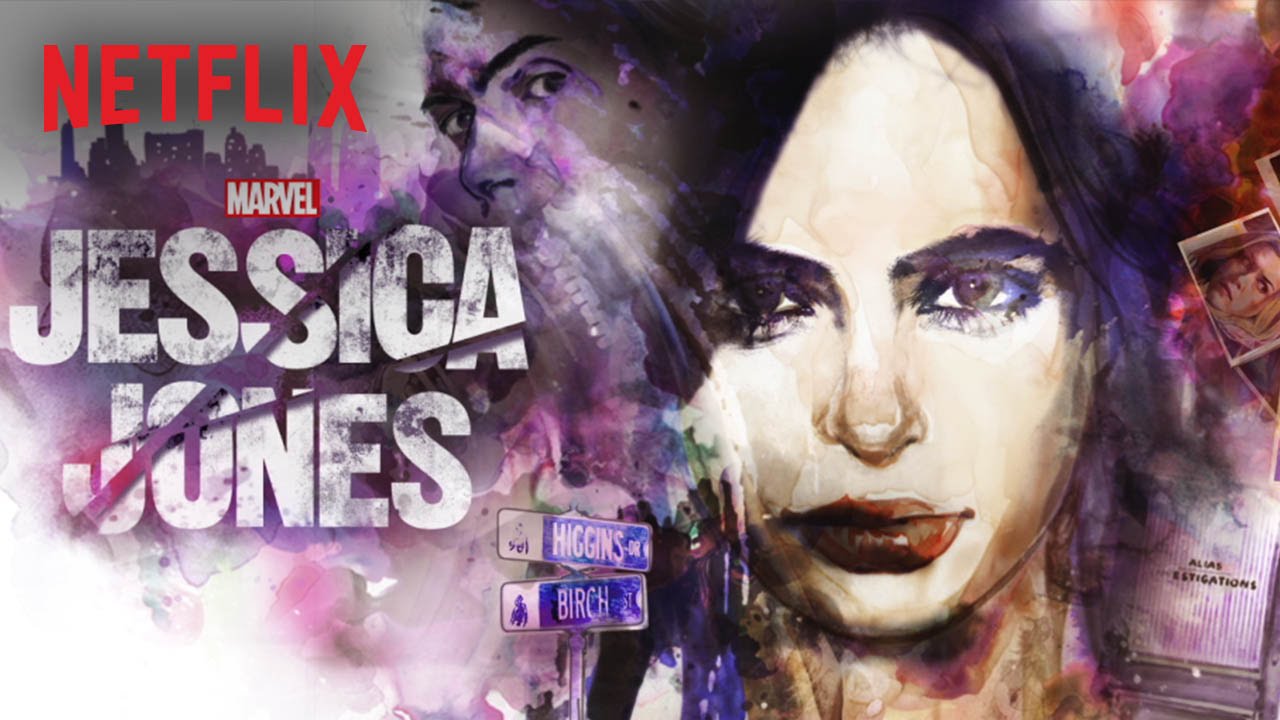
Jessica Jones - a light review
Jessica Jones is a great feminist twist on standard male-lead action-crime shows, with some great characters (Trish and Jeri, to name two) and very interesting takes on both PTSD and the patriarchy (SPOILER: most straight white male characters are villains).
However, it loses steam a little after half-way through. The series could have dropped a storyline or two, reducing the episode count to 8-10 episodes and been better/tighter for it.
Thoughts on the two protagonist/antagonist:
Jessica Jones - Cool and badass, while also dealing with PTSD. She's an interesting character, but her arc over the show is a bit flat. Most of the time, she's in her dour, tired mood and for all she drinks, alcohol never seems to affect her. She emotes most when she's in a panic, which is great to see, but one would think the alcohol could be better used to play into her PTSD. Perhaps her "flatness" is commentary on someone with PTSD (or I'm missing something), which is definitely interesting and can hopefully be elaborated on in future seasons/series.
Kilgrave - Simultaneously very interesting and lame. His powers are incredibly strong, but his focus is so small - all he wants is Jessica. He lacks the flare of more grandiose villains (e.g. Wilson Fisk, Joker, Goldfinger, et al), but is also a very interesting character and case study. That his focus is only Jessica separates him, but makes him slightly underwhelming; however, he goes to some "cool" lengths to achieve his goals.
At the end of the day, Jessica Jones gets a fairly solid RECOMMENDATION, as the main plot between Jessica and Kilgrave is good. Just be wary of the many melodramatic sub-plots that detract from what could have been a tighter personal story.
However, it loses steam a little after half-way through. The series could have dropped a storyline or two, reducing the episode count to 8-10 episodes and been better/tighter for it.
Thoughts on the two protagonist/antagonist:
Jessica Jones - Cool and badass, while also dealing with PTSD. She's an interesting character, but her arc over the show is a bit flat. Most of the time, she's in her dour, tired mood and for all she drinks, alcohol never seems to affect her. She emotes most when she's in a panic, which is great to see, but one would think the alcohol could be better used to play into her PTSD. Perhaps her "flatness" is commentary on someone with PTSD (or I'm missing something), which is definitely interesting and can hopefully be elaborated on in future seasons/series.
Kilgrave - Simultaneously very interesting and lame. His powers are incredibly strong, but his focus is so small - all he wants is Jessica. He lacks the flare of more grandiose villains (e.g. Wilson Fisk, Joker, Goldfinger, et al), but is also a very interesting character and case study. That his focus is only Jessica separates him, but makes him slightly underwhelming; however, he goes to some "cool" lengths to achieve his goals.
At the end of the day, Jessica Jones gets a fairly solid RECOMMENDATION, as the main plot between Jessica and Kilgrave is good. Just be wary of the many melodramatic sub-plots that detract from what could have been a tighter personal story.
Labels:
david tenant,
jessica jones,
kilgrave,
krysten ritter,
luke cage,
marvel,
netflix,
ptsd,
review,
series,
trauma,
TV
Wednesday, November 4, 2015
Anime review: Knights of Sidonia (seasons 1 and 2 available on Netflix)
Having watched it last year, I don't particularly remember the first season - I recall it seeming a bit slow and uneven, with an initially-odd-but-grows-on-you animation style. However, there was something interesting about it and it progressed nicely, building out the world, characters and general plot/story.
The second season is a more "complete" season. It didn't progress the story a whole lot, but was a very enjoyable character-building season; it felt very much like a Netflix-style show (although they apparently only commissioned the localization), where they took their time to tell the stories they want to tell and everything flowing together well; granted, that's typical for good anime and its serialized storytelling.
One of my big gripes with the second season (besides the lack of major storyline progression) is that while watching the fleshing out of the characters and growing relationships, I noticed a strange dichotomy on how the show is strangely both misogynist and feminist. The show has a LOT of fleshed out female characters, but a strong portion of them fall into the trope of falling for the male lead. In this case, the male lead is an amazing mech fighter, but awkward human. Granted, there's lots of awkwardness abound, which does help play with the ideas of the characters being slightly a-human due to their situation, but it lessens the show to a degree (must EVERY lead female develop feelings for the sensitive lead male?). It feels quintessentially Japanese, in both good ways and less so.
That said, it does a very interesting job of showing people falling for someone who clearly is not paying attention/still not over their ex. I found that take on the story to be more interesting than the repeated awkward romance attempts and lesser plotlines.
Recommended as a casual viewing for people looking for an interesting space-faring mech action romance sci-fi show that could only come from Japan and is easy to consume. Just brace yourself if you're expecting greatness (or closure, as at least a third season is necessary, which I welcome).
Thursday, July 9, 2015
Inside Out review - Pixar is Growing Up
The very quick review is that, as of right now, it didn’t work for me.
Inside Out has a lot of great ideas and is a very interesting interpretation on the inner workings of the mind, but as a movie, it fell flat due to its choices of characters and stories. To start, here’s what I liked (minor spoilers ahead):
1. The overall idea that sadness is OK and something we should accept and embrace
2.The general representation of depression being a lack of emotions and mentally shutting down
3. Bing Bong’s arc and emotional climax (favorite character, by far)
4. Riley’s emotional climax
5. One-off gags (e.g. facts vs opinions, catchy songs, most of the end credits), though I do have issues with these explained below
6. A lot of the psychological research that went into the movie
What didn’t work for me was the following:
1. The story of the Emotions taking away from the actual depth of characterization - Riley has less agency as she’s controlled more by her emotions than being an actual “being” (elaborated in #3 below)
2. The Emotions themselves being fairly one-dimensional as characters, though they have a small degree of emotional range; sure, they may gain a wider spectrum as they age, as evidenced by the parents, but what is their actual growth and development journey? Joy seemed to be the same from her day of conception to when Riley’s 11/12 and borderline annoying. Shouldn’t the emotions be more simple with younger age?
3. Similarly, the rules of the world are very, very strange. Pixar made an inventive take on the inner mind, but their consistency for the world at large appears lacking, particularly as other characters’ minds are reduced to stereotypical gags - the dad daydreaming about hockey, the mom daydreaming about the man who got away, teen boys freaking out about girls (which admittedly was VERY funny), the truck driver, the dog, the cat (particularly with the animals, why don’t they have sophisticated emotions like the humans had in their heads? Pixar went for obvious jokes). While they did show an interesting take on the mind expanding with age, it still leaves much to the imagination of how people grow and develop; not to mention why some people have different genders in their head or a different balance of emotions. Also, Bing Bong clearly had emotions - what’s going on inside his head?
4. On a minor note, if the story was about growing up and leaving childhood behind, the Toy Story films did a better job of this, particularly Toy Story 3.
Possibly my biggest irk is that, while this is a semi-autobiographical tale from Pete Docter based largely on his daughter, the story did not feel like his to tell. What should have been a really poignant coming of age story for Riley was reduced to this really adult take on what’s going on in her mind - the emotions were too smart, the humor was geared more for adults (reference and intelligence-wise) and the overall concept may have been too highbrow. As well, it felt rather disingenuous for Docter to tell this really personal story about someone else, when it would have made more sense for his daughter to tell THIS story.
On the other hand, had Docter made the story more about his own journey, that of the Dad’s, as he moves his whole family and ventures into a new land and new creative endeavor, while still figuring out how to balance his family life, particularly his inability to connect to his developing daughter, that would have been much more fascinating. A story of people coming of age together and learning to emotionally connect, especially when they have no idea what’s going on in the other person’s mind feels much more befitting of this than what actually happened.
Or a movie about a person learning to CONTROL their emotions, rather than letting their emotions get the best of them would have had a better message. I’ll easily admit my thoughts are judged by my own experiences and perspective, where I consider the world to currently be too emotional (particularly the US) and emotions getting the best of us causes us to disconnect from others. While the movie’s message of it being OK to accept emotions is a commendable one, a better message for society would be to also learn how to control them as we learn to relate to and communicate with others.
Because the movie only touched on one dimension of emotions in a disconnected-from-character-depth way, it fell flat for me. It was a great first stage of what could have been a more fleshed-out story as mentioned above. As it was, this felt like a gimmick that was best displayed by the dinner scene (which was a trailer).
I’m happy to give the film a rewatch and re-evaluation, but as of right now it gets only an AMBIVALENT RECOMMENDATION, as the artistry and technical prowess behind it is commendable. Also, Richard Kind’s Bing-Bong is just freaking amazing.
Last, it was known there were issues with the film for awhile, so if they were able to create this in a limited time and with limited sources, then that definitely deserves much applause.
Labels:
amy poehler,
anger,
animation,
bing bong,
disgust,
Disney,
emotions,
fear,
inside out,
john lasseter,
joy,
lewis black,
minnesota,
movie,
pete docter,
Pixar,
review,
riley,
sadness,
toy story
Subscribe to:
Posts (Atom)